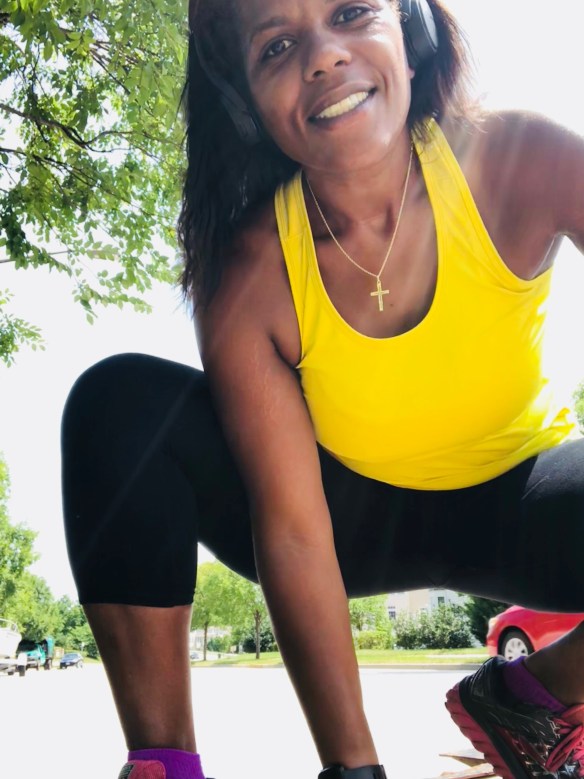
Become aware of and change your limiting beliefs

Beliefs are conditioned perceptions that are built upon old memories of pain and pleasure.

Beliefs form the foundation of our expectations. They form the core of who you are because they determine your expectations and perceptions of reality. The thoughts and self dialogue that follows from that influences your ability to achieve and be successful through the day. Every day.

Scary and completely empowering concept right?!

Essentially the beliefs you got going on in your head right now are influencing 95% of the decisions you make and the actions you take.

They form the foundations of your self concept which determines what? How you see yourself in relation to the world around you.

For example, when I was younger my default in high pressure social situations was to think that people were rejecting me. That was partly built on truth and experiences from being the only black kid in my hometown and actually being discriminated against but later in life it wasn’t reality. I had to shed that belief.

The labels you give yourself, the limitations you put on yourself, and the expectations you have of yourself are built upon your belief system.

If your belief systems are not aligned with the goals and objectives you would like to accomplish, then you will often feel stuck and unfulfilled.

I know I’m operating from limited beliefs in the wellness part of my life when I start pulling for short cuts in training or avoiding certain exercises/machines at the gym. So today I said “F a Jacob’s Ladder! I’m about to make this torture contraption my bitch!” There’s nothing telling me I can’t master it but me! I deserve to be in the best shape I can be. I 100% believe I’m capable of something great physically today! My steps (actions) need to follow in suit.

Which brings me to the empowering part of beliefs…the fact that YOU can change them. Change your dialogue and change your story.

What’s the fastest way to change limiting beliefs?

Visualize. Imagine the results mentally. Start producing them physically and that inspire and drive your beliefs in yourself.

Taking a step back let’s start slow.

Step 1 and my challenge to you today is to IDENTIFY YOUR LIMITING BELIEFS.

*Not all beliefs are limiting and all beliefs are neutral to start. A belief that works for you in your situation may not work for him and his situation.

If a belief helps you and is useful. Keep it! But if it hinders your progress than it’s an indication it’s a limiting belief.

Limiting beliefs manifest in the following ways:

• When you make excuses

• When you complain about things

• When you indulge in negative thoughts

• When you indulge in unhelpful habits

• When you talk to yourself in limiting and unhelpful ways

• When you jump to conclusions or make assumptions

• When you hesitate

• When you worry about failure or making mistakes

• When you think about procrastination or procrastinate for unreasonable amounts of time

• When you’re indulging in perfectionism

.

Follow me on Instagram @SASFitPractice or @OfficeWithoutWalls

Check out my YouTube channels at https://www.youtube.com/user/Sahmra1331

People Be Crazy: Guard Your Sanity With These Helpful Mobile Apps

I’m a business owner. I ain’t got time to lose my mind. If you can relate…here are some apps to help you guard your sanity no matter when or where you need them.

Insight Timer.

Rated as the top free meditation app on the Android and IOS stores, Insight Timer is home to some 7,697 free guided meditations, music tracks, talks and courses on a variety o topics. There are so many topics and practices to choose from; you can listen and find what works best for you.

Best part or lawyers – you get to decide how much time you want to devote to the practice. You can literally find tracks that last no more than a few minutes. Perfect for a quick mid-day stress relief session!

For more info visit insighttimer.com.

Headspace.

According to the folks at Headspace, “[i]t only takes a few minutes to change the rest of your day.”  Headspace teaches you to mediate and live mindfully with hundreds of themed sessions on everything from stress to sleep. BONUS! There are short session for busy schedules! -See, I told you I was gonna take care of you!

Meditation has been shown to promote subtle improvements in focus, attention and the ability to ignore distractions. Even if you don’t feel stressed, mediation can be useful for overall mental well-being in your practice.

For more visit headspace.com.

Worry Watch.

If you find yourself distracted by worries about cases, clients or personal events, Worry Watch may be an app for you. Worry Watch is a journaling app that allows you to track your worries in the moment and revisit them later.

The idea: You “reflect” on your anxiety patterns “realize” the outcome, and “reform” based on your own statistics. You might find that many of your fears are unfounded.

For more visit worrywatch.com.

Happify.

Our profession often creates and allows negative thinking patterns to take over and we don;t even realize it. Happify is a brain training app that helps you break negative patterns of thinking while forming new habits to help you take control of your thoughts.  The app consists of games and activities that can be used anytime and anywhere. YES!!!

As Happify says, “[s]mall slices of time can make big-time changes.”

For more visit happify.com.

Pacifica.

According to Pacifica, our reality is created through ongoing cycles of thoughts, feelings and behaviors. These can be positive or negative. Pacifica works to help you break negative cycles and learn to manage and change thinking and behavior patterns through cognitive behavioral therapy.

For more visit thinkpacifica.com.


For inspiration, motivation and outside-the-box ideas for living a healthy and happy work life Follow me on Instagram @SahmraStevensonEsq or @OfficeWithoutWalls

Or tune in for video content at….YouTube: https://www.youtube.com/channel/UC2XcEIoaCJ-3VoaXNnT0pwQ


Keeping Your Balance: The thinking about problem drinking and alcoholism has changed


Alcohol Use Disorder: Helpful Tools from the National Institutes of Health.    

The thinking about problem drinking and alcoholism has changed. It is no longer considered a black and white, you have it or you don’t, issue.

As the most commonly used addictive substance, it’s no surprise that alcohol addiction is prevalent in our society. In the US, more than 17 million adults have an alcohol use disorder (AUD). There are many factors that can contribute to developing an AUD, including your occupation.

According to a recent study by the Substance Abuse and Mental Health Services Administration (SAMHSA), an annual average of 8.7 percent of full-time workers aged 18 to 64 used alcohol heavily in the past month. Whether it’s on the job, during lunch break or before/after hours, alcohol abuse can cause major issues in the workplace, including:

As recently reported in NPR, the NIH describes that mild, moderate and severe problems exist and that there is not a one-size-fits-all approach to getting help. To help solve the problem, NIH has launched and online Alcohol Treatment Navigator website that is very informative and offers various assistance forms and guides.

www.alcoholtreatment.niaaa.nih.gov

Looking for the right questions to ask? How to help a friend? Advise a troubled client? The site is easy to navigate.

The tool-kits offered on the site include online evaluations and surveys to determine if you or another suffers from alcohol use disorder (*Note -honesty is required for best results), data on symptoms and severity, and guidance on questions you may want to ask a counselor or therapist.

In lawyer terms: It’s a website that helps people explore all the “evidence based” options, which may be more appealing to the legal and young professional crowd.

For ideas on how or what to move….Follow me on Instagram @SahmraStevensonEsq or @OfficeWithoutWalls

Or tune in for video content at….YouTube: https://www.youtube.com/channel/UC2XcEIoaCJ-3VoaXNnT0pwQ

FIVE rules for living your best life…. every day.

FIVE rules for living your best life…. every day.

  1. Insist on self-expression
  2. Get In Action. Stay In Action.
  3. Seek gratitude awareness
  4. Try and help someone everyday
  5. Move the Body

IMG_2674

I’ve been on this little journey exploring how to go about living my best life for a few years now.  It started out as an act of desperation. I was drowning in the world of working for others instead of building-up my own business and brand. Now that I’m out here I’m realizing living my best life is much more than that. Living a happy life is an intentional practice, and living your best life is the natural side effect that comes from pursuing and improving that practice every day.

Over the past year I’ve been playing around with different daily routines.  The 5 practices above have become my daily rules for happy living.

There are numerous ways to seek happiness in your day, but this is what has worked for me as a busy young professional. I encourage you to identify the things from this list that are helpful to you and try them, tweak them…make them your own.

  1. Insist On Self-Expression

This one is at the top of my list because it is absolutely essential to preserving some semblance of sanity, nurturing a sense of self, and feeding your vision and purpose for life as you continue to live it.  Let me clarify what I mean by “self-expression.”

We express ourselves generally as a part of our every day lives. In our professional lives to our colleagues, clients and counterparts. In our personal lives to our family and friends. Sometimes even to perfectly good strangers when they do things like cut us off on I-495. I’m not talking about how we express ourselves in these ways.  What I mean by “self-expression” is the expression of your feelings and thoughts through intentional activity.

The benefits of active self-expression are often times subtle and work “behind the scenes” in our lives.  When practiced regularly, intentional and active self-expression promotes self-awareness, self-knowledge and self-control.

What does active self-expression look like? Active self-expression is different for everybody at different times. That’s the beauty of it! There aren’t any rules to how you do it because it’s yours! Singing, dancing, drawing, writing a blog article, journaling, speaking to others, designing a new workout… these are just a few that I rely on, but the possibilities are endless.

  1. Get In Action & Stay In Action.

If you’ve ever gotten stuck, or just had trouble getting started during the day you’ll appreciate this one. Procrastination is frustrating, It can jack-up a whole day. Worse, it can kill enthusiasm and the drive necessary for knocking out your list of goals.

Procrastination is usually rooted in fear, but knowing that isn’t always helpful in the moment because, “hello” we have things to get done. Pausing to evaluate our hang-ups, anxieties and inner struggles when there is a deadline to meet is not going to work.

What IS helpful when you’re stuck, or can’t get started, is reminding yourself to “get in action, and stay in action.” Say it to yourself, BELIEVE IT, repeat it, and then get moving.

No overthinking or catastrophizing here! Just get yourself in motion and try not to resist the flow that follows.  The moment you jump in, complete even the smallest task, and GET IN ACTION, you’re going to feel better. Your brain is going to be reminded that “you got this!” Your self dialogue is going to improve. You’re going to have more hope. Your perspective will change and you will be in position to create momentum in your day.

  1. Seek Gratitude Awareness.

How many times have you ended your day thinking about all the things you DIDN’T get done? How about you stop doing that?! Instead make a mental note of what you DID accomplish for the day and what things you did well.  Appreciate yourself and your efforts, even where you’ve fallen short.  Identify and appreciate the things that did work out for the day, even if its just as simple as remembering to make it to the dry cleaners. Let them carry you into appreciating the ways you’ve fallen short as lessons that have the potential to carry further than you knew you could go.

This is a simple example of practicing gratitude awareness in your everyday but there are many more. Ideally getting in touch with some gratitude before the day is all the way over is going to benefit you more, but hey, sometimes the end of the day is all we got and that’s better than nothing.

I love this rule because gratitude is truly a game-changer. A beautiful way to incorporate it into your morning is with a gratitude list.  It doesn’t have to be complicated. Keeps some note cards in the car or make this a part of your journaling (Insist on self-expression) before jumping into your work for the day.

The point is that what we focus on throughout the day magnetizes in our minds. Choosing to focus on gratitude and positive takeaways keeps us MOVING FORWARD (Get in action & stay in action) and attracts more good things in our lives.

  1. Try To Help Someone Everyday

Helping others should be a natural extension of every business leader’s responsibilities. Unfortunately, it doesn’t come as easy as you would think. As leaders, we often get too caught up in operations or our own problems to give people the help they need. Working in a service profession I’ll admit this one did not become a regular daily practice for me for some time because, well, I thought what I was doing professionally was enough.

Helping others is more than just service work, its work on yourself. It forces you to get out of your own head and shift your focus from self and all the things you can’t control in life. It offers valuable perspective that can help you deal with your own struggles and worries. It cultivates gratitude and awareness of the blessings already present in our worlds. (Seek gratitude awareness) Those are all good thoughts and feelings we get to carry with us as a result of reaching out to others.

  1. Move The Body

Last, but not least, and by far my favorite rule for a happy and winning day is moving the body.

Most of us spend a considerable part of the day sitting or standing still. Its unavoidable, and we all know it’s unhealthy for the body, but it is also toxic to the mind. Depression, sadness and a host of other negative emotions like anxiety and fear are acutely allergic to things like sunlight, fresh air and movement.

Making room for physical activity in your day is making room to take care of yourself.  Moving the body can be a form of self-expression. It’s also a great way to get unstuck (Get in action & stay in action) and jump start your brain. It builds confidence and self-esteem over time which are essential to living your best life, happy joyful and free!

For ideas….Follow me on Instagram @SahmraStevensonEsq or @OfficeWithoutWalls


http://www.sasfitpractice.com



It’s not dieting, it’s changing your lifestyle that matters.

It’s not dieting, it’s changing your lifestyle that matters.

What I’m about to say is not brand-new information but I feel inclined to touch on it because around this time of year is when folks are most susceptible to fall for diet marketing gimmicks also known as “quick fixes” when it comes to pursuing personal weight loss and physical fitness goals.

You know the kind. They usually end with the word “diet” and begin with the name of a city or a fruit, or something designed to pull you in and convince you of some sort of magical ingredient or power sure to be the end to all your woes and nightmare battles with the scale. How many of these can you name? South Beach Diet, Grapefruit Diet, Cabbage Diet, Green Smoothie Diet, Cayenne Pepper & Lemon Cleanse, Atkins Diet, Keto Diet, Vegan Diet…. the list goes on. Am I saying these diets are bogus? No not at all. They have been celebrated because they produce quick short-term results when followed, but if they are all you are relying on you are setting yourself up for frustration and failure.

They can also lead to a sense of confusion and misdirection about what really works when it comes to successfully losing weight and understanding your body -it’s needs and science.

If you want to lose fat and keep it off, if you want to feel good year-round, you have to make a lifestyle change and that means looking at behaviors, patterns, mind sets, and even the emotions sometimes surrounding your fitness and/or nutrition practices.

What does a lifestyle change look or feel like? How do you know you’ve made a change? Do you get some sort of magical wisdom when you “make the change”? Does that mean you will start craving broccoli and not chocolate?

These are good questions. And here is the answer and the secret to succeeding with this at the same time: The difference between a diet mentality and a lifestyle mentality is a matter of perspective. Ta-da!!!! How about that for some reality.  It all starts in your head and with your attitudes.[1]

So how do you change your attitudes? Well you’ll be happy to know I can answer that with two simple words.  GET MOVING! Moving your body physically impacts your mood, your state-of-mind and most importantly your perspective. Over time getting moving ultimately makes you feel better. Going back to the broccoli, you won’t find that it tastes better because you are in the right frame of mind, but you might have a better attitude about eating it, and that can make a difference when it comes to keeping your goals in mind in the long term.

Indulge me while I take a slight detour here: You don’t have to make things overwhelming. If you have trouble motivating yourself for long workouts, chop it down into manageable size pieces to get started and let the momentum carry you as you build over time.

For example, walking for 15 minutes, four times a day burns as many calories as walking steadily for an hour. There may be benefits to combining them into one long walk, but you need to weigh that against what you enjoy doing and what fits into your schedule.[2] Perhaps you build up to something longer as you become more clear about what works for your body and your schedule. That will only happen if you KEEP SHOWING UP though -without applying the movement rule consistently, you cheat yourself of the opportunity to learn and adjust for long term sustainability. [3]

Okay, now back to the subject at hand: If you want to make the change from a diet mentality to a lifestyle mentality you have to believe that you can do it.  As you are making your resolutions this year and deciding where to make changes and how, here are two central themes to keep in mind that might make the difference between success and failure for you this year:

Diets are all about numbers while lifestyle changes are about #YOU
Diets are all about numbers -the numbers on the scale, the number of calories you eat, the number of calories you burn. These numbers, and how well you STICK to these numbers define your success on a diet.  Lifestyle changes are about YOU -its about making your eating and physical activity on a daily basis, match up to your overall goals and desires. Your success is defined by how you learn to make these changes consistently and how those changes make you feel internally as well as externally.  Your success with applying these changes will come sometimes quickly, and other times more slowly, but the changes and improvements will be apparent to you so long as you put in the work and keep showing up for yourself.

Diets are temporary. Lifestyle changes are FOR LIFE (with room for growth and change)

Diets can only change your appearance, they can’t change what is inside of you. If your mindset and emotions, your old ideas, remain the same, you will eventually return to old behaviors. The more you repeat this short-term pattern, the worse it gets.

Lifestyle changes involve both an internal and an external change. It involves changing your relationship with food, nutrition and exercise. The problem isn’t just what you eat or how much of it you eat, but HOW and WHY you eat the foods you do. What really needs to change is the pattern of eating mindlessly and impulsively and in some cases using food to manage stress, emotions or to distract yourself from your own thoughts.

That doesn’t mean you don’t need to think about eating sensible options and portions, that is very important. But it is not as important as your ability to get to a happy and satisfied place inside yourself. Learning to be happy with and accept the body you have is how you get yourself closer to the body you are ultimately working for and how you keep it. Diets don’t teach you that.

Moving the body matters.

Time to bring things full circle: The easiest adaptation to your daily schedule that you can make is to not find, but MAKE the time to do yourself a favor and get your body moving. Negative emotions like depression and anxiety are allergic to things like sunlight, fresh air and most importantly physical activity and movement. Don’t psych yourself out. Take on little bits at a time.

For ideas on how or what to move….Follow me on Instagram @SahmraStevensonEsq or @OfficeWithoutWalls

Or tune in for video content at….YouTube: https://www.youtube.com/channel/UC2XcEIoaCJ-3VoaXNnT0pwQ


[1] That’s another reason why fad diets can be so damaging in the long run, because their results don’t last, and the message that sends to the average consumer is that long term weight loss success is not an option. Not to mention these quick fixes are designed to be extreme, the purpose being to shock your body and get results in a matter of days or weeks. But most times they shock your mind too because the focus is on deprivation or nutrient avoidance. Message sent? To eat healthy I have to get and remain miserable. Wrong.


[2] The American Heart Association and the U.S. Centers for Disease Control say in their exercise guideline for healthy adults that you should get 30 minutes of moderately intense exercise, such as brisk walking, five days a week, or a total of 150 minutes spread out over the week.


[3] The short-term discomfort is worth it stick with it!