
Healthy Relationships and Our Immune Systems

Tis’ the season for pruning! Relationship pruning that is. The end of the year is a good time to take a look at the quality of our relationships and the influences that have found their way into our lives over the past eleven months. The better our relationships are, the greater our potential for success and sustained happiness. Just as importantly, the better our relationships are, the better chance we have at maintaining good physical health and a strong immune system.

Thirty years ago many scientists would have scoffed at the idea that your health could be affected by what goes on in your mind or with your emotions. But today, the mind-body connection is widely accepted.

Scientists now know that the immune system talks to the brain and the brain talks to the immune system. These connections play an important role in both preventing disease and maintaining your health. However, the brain doesn’t exist in isolation. It is intimately tied to our environments. Our environments include the social networks we develop throughout our lives.

The Immune System and Social Networks

Even when we are physically alone, we still carry our close and intimate connections within us.

In her book The Balance Within: The Science Connecting Health and Emotions, Dr. Esther Sternberg notes that “[s]omewhere in our brains we carry a map of our relationships. It is our Mother’s lap, our best friend’s holding hand, our lover’s embrace –all these we carry within ourselves when we are alone. Just knowing that these are there to hold us if we fall gives us a sense of peace.”

With this internal map of connections, we are better able to navigate the world and its terms. We benefit from the social bonds we form as if they are an extension of our immune system. Imagine your family, friends and social support networks as a vast collection of immune cells striving to maintain your health and protect you from disease. Healthy interactions support healthier attitudes, outlooks and behaviors. Thus through our emotions and their maintenance, our social networks are tied into our inner immune network.

What makes social connections healthful

Scientists are still exploring how biological and behavioral factors account for the health benefits of connecting with others. For example, countless studies have shown that making connections, even momentary ones, helps to relieve harmful levels of stress, which can adversely affect coronary arteries, gut function, insulin regulation, and the immune system. Other lines of research have shown that caring behaviors trigger the release of stress reducing hormones in the brain.

Research has also identified a range of activities that qualify as social support, from offers of help, the doing of formal service work, or the simple giving of friendly advice, to expressions of affection, appreciation and love. Evidence suggests that the life-enhancing effects of social support extend to the giver as well as to receiver. The simple act of getting out of oneself can have a material impact on moods, perspectives and outlooks on life.

All of this is encouraging news because caring involvement with others may be one of the easiest health strategies to access. It’s inexpensive, it requires no special equipment or regimen and we can engage in it in many ways.

Loneliness

Contrastingly, loneliness can have dramatic consequences for your health. Loneliness can lead to disrupted sleep patterns, elevated blood pressure, and increased cortisol (a stress hormone). It can affect your immune system and decrease your overall sense of contentment. Loneliness is also a risk factor for antisocial behaviour, depression and suicide.

Older people are particularly vulnerable. If your mobility decreases, it can be harder to get together with other people. However, older people who remain connected with others and have strong relationships are likely to: have a better quality of life; be more satisfied with their life; and have a lower risk of dementia and mental decline need less domestic support.

Younger people (teenagers and people in their 20s) are also at risk when they are isolated. A lack of social relationships can have a direct impact on a young person’s physical wellbeing by increasing the risk of obesity, inflammation and high blood pressure.

Strengthening ties this holiday season

Around the holidays, it’s easy to get caught up in the whirl of social activities and perhaps lose track of their deeper purpose: providing an opportunity for people to come together. Of course, not all forms of holiday conviviality are health-promoting — eating or drinking excessively, for example. Likewise, social contacts don’t uniformly enhance our well-being. (Take inventory. Choose wisely. Prune and move-on)

So, during this busy season, take time to foster your most meaningful relationships. Choose activities that are most likely to bring joy to you and the people you care about. Delegate or discard tasks that eat into your time, or do them together with family or friends. And if you can’t get together with everyone you’d like, make plans to see them post-holiday.

By, Sahmra A. Stevenson, Esq. (“Your Family’s Personal Lawyer”)

S.A. Stevenson Law Offices, LLC

For inspiration, motivation and outside-the-box ideas for living a healthy and happy remote work life follow me:

Instagram https://www.instagram.com/SASFitPractice/

Instagram https://www.instagram.com/OfficeWithoutWalls/

YouTube: https://www.youtube.com/channel/UC2XcEIoaCJ-3VoaXNnT0pwQ

Facebook: https://www.facebook.com/OfficeWithoutWallsTM/

Facebook: https://www.facebook.com/SASLawOffices/

Website: https://www.saslawoffices.com
Harnessing Your Habit Energy

I’m writing this article while on a personal retreat in Mexico. I take these solo trips often as a part of what I lovingly call “mindfulness medicine.” They allow me to get away from my Habit Energy, a concept I was introduced to a few years ago. Now I was taking these trips long before I ever heard of Habit Energy, I just didn’t know what I was getting away from had a name, until I came across the work and writing of a well-known Buddhist monk, author and activist, Thich Nhat Hanh. His lifelong efforts of fostering peace throughout the world moved Dr. Martin Luther King to nominate him for the Nobel Peace Prize in 1967. In one of his more than 80 best-selling books, Savor, about mindful eating, he remarks about his observations from a visit to the U.S. While here he noticed that most people tend to live with a lot of Habit Energy. Here is a personal example of every-day Habit Energy, and a little bit of telling on myself.

The day before I was set to leave on this trip, I was unable to email an important letter to opposing counsel hours before our Zoom hearing in the Circuit Court, due to a technical glitch with my PC. Because I was rushed, I yelled a few cuss words at the computer and stormed out of the room like a child. One of those moments you’re glad you’re alone because you know you look and sound like an absolute lunatic. The five minutes it was taking for the machine to catch-up seemed like 5 hours because I was in a hurry to get on to the next thing in my day, determined to get as much done in as little time as possible. This is how many of us live. When I pause and replay what happened, there was no emergency. I was stuck in the Habit Energy our society binges on that emphasizes productivity, busy-ness and consumerism.

How often do you find yourself rushing through a task when you actually have plenty of time? Perhaps on the way to the store on a Saturday, with no other discrete plans after? What were you rushing about? Habit Energy is precisely that potent force that yanks us through life, propelling us to rush through most of our activities in order to get to the next one, often when there’s no rush at all. More time is better, right? Heck, more of anything is always better!

The force of Habit Energy is so unwavering because we tend to be unaware of it and often feel powerless to change it. Similar to the above example with the printer, Habit Energy is when we get annoyed and impatient when we need to wait two minutes in line to purchase our lunch. It’s when we feel irritated that our friend arrived 10 minutes late instead of just relaxing and doing something else with our time. It’s when you’re fuming at the person in the car in front of you for not advancing their car immediately when the traffic light turns green.

“These moments can be bells of mindfulness” Thich Nhat Hanh reminds us. We don’t realize we can enjoy these pauses to appreciate life and let all our blessings sink into consciousness instead of rushing just trying to “kill time.” Yes, I see you at the red light checking your phone even though there’s nothing you need to check. What a phrase, “killing time!” Time is one of our key allies!

    “We are always running and rushing. It has become a habit, the norm of everyday living. We run all the time, during our sleep, the time we are supposed to be resting and regenerating our bodies. We can be worst enemies, in conflict with ourselves, and therefore, you can easily start conflict with others…”

As Hanh suggested, what the heck is the rush? Is our Habit Energy exhausting us, making us run all over the place, rushing everywhere? Is this really a desirable life? Better yet, is it sustainable? If you seek peace and happiness, what are we doing to ourselves with all the rush?

This is your gentle reminder to slow down, as our lives are too precious to rush through. Mindfulness practice can help with this. If you’re not into practices like breathing or meditation, merely slowing down the activities of your daily life periodically can also help.

I rarely enjoy activities I rush through. I likewise less likely to produce anything of quality when I’m rushing. That’s not life or happiness. Rushing through tasks stymies enjoyment, pleasure, and possibly creativity too. It also makes us even less productive.

While it’s easier said than done, doing the tasks of our daily lives slower and more mindfully is a practice that can add ages to our lives. You don’t always have to sit quietly to practice mindfulness. You can start with brushing your teeth and doing the laundry with more attention and care.

The good news is that the more you become aware of your Habit Energy and the automatic conditioning fueling it, the less power it has over you; the more you can intentionally decide your pace or next right action. When I notice the pull, the entitled expectation for immediate gratification, I can pause and just notice it, before I act on it, directly hijacking the Habit Energy. Mindfulness practice directly cultivates this capacity.

That’s the power of mindfulness—the freedom to pause and savor your life, the only life you have.

By, Sahmra A. Stevenson, Esq. (“Your Family’s Personal Lawyer”)

S.A. Stevenson Law Offices, LLC

For inspiration, motivation and outside-the-box ideas for living a healthy and happy remote work life follow me:

Instagram https://www.instagram.com/SASFitPractice/

Instagram https://www.instagram.com/OfficeWithoutWalls/

YouTube: https://www.youtube.com/channel/UC2XcEIoaCJ-3VoaXNnT0pwQ

Facebook: https://www.facebook.com/OfficeWithoutWallsTM/

Facebook: https://www.facebook.com/SASLawOffices/

Website: https://www.saslawoffices.com
Setting Boundaries & Protecting Your Space

Our personal boundaries aren’t as obvious as a fence or a giant no trespassing sign, unfortunately. They are more like invisible bubbles or forcefields. Nonetheless there are things that we most certainly need to be intentional and mindful about taking care of. This article will discuss more about why and how.

The word “boundary” can be misleading. It conveys the idea of keeping yourself separate. But boundaries are actually connecting points since they provide healthy rules of navigating relationships, intimate or professional.

Even though personal boundaries can be challenging to navigate, setting and communicating them is essential to our health, well-being, and even our safety. Setting boundaries for yourself and honoring the boundaries of others isn’t a textbook science, but you can learn ways to take charge of your life. Whether you want to set clear rules with your family, or assert your space when it comes to coworkers, or even strangers, here’s how to get started.

Boundaries are a deeply personal choice and vary from one person to the next. They are everchanging and we form, and reform them throughout our lives.[1] One standard can’t hold for everybody. Rather, each person needs to find a level of comfort within themselves. We can each investigate and define your own boundaries with self-reflection.

Identifying and being clear about your basic human rights is an important part of setting personal boundaries. Here are some examples of basic human rights to begin with:

  • I have a right to say no without feeling guilty
  • I have a right to be treated with respect
  • I have a right to make my needs as important as others
  • I have a right to be accepting of my mistakes and failures
  • I ever write not to meet others unreasonable expectations of me

When you identify the rights that you believe in you’ll find honoring them much easier to do. When you honor them, you’ll stop spending energy pacifying or pleasing others who dishonor them.

Your instincts can help you determine when someone is violating your boundaries or when you need to set one up. Check in with your body, is your heart rate elevated are you sweating tightness in chest stomach throat? For example, maybe you tighten your jaw when a particular client calls multiple times; you find yourself tensing-up when family members pry into details about your love life, or you clench your fists when a roommate borrows your new coat. Physical reactions are cleat indicators that setting a boundary may be necessary.

Set boundaries with confidence:

  1. Be assertive

Get comfortable with using “I” statements. Not only do they support you being honest about your true feelings, but they also allow you to focus on what you have control over, yourself. I statements show confidence and good boundary setting by expressing thoughts, feelings, and opinions without worrying what others are thinking.

If someone sets boundaries with assertiveness, it feels firm but kind to others. Assertive language is clear and nonnegotiable, without blaming or threatening the recipient.

  • Learn to say no

Even though it can be daunting to say, “No” is a complete sentence.

We might be hesitant to say no without offering more info, but it’s not necessary. Sometimes assertiveness isn’t needed for boundary setting as much as personal tolerance for being uncomfortable.

You can say no without an explanation and without providing any emotional labor to the person you’re saying it to. If someone asks for your number or to dance, you can absolutely just say no. If a co-worker asks you to cover their shift, you can also say no, without offering any excuse.

  • Safeguard your spaces

You can also set boundaries for your stuff, physical and emotional spaces, and your time and energy without necessarily announcing it, too. The features on your tech devices offer some ways of doing this. Savvy boundary safeguards:

  • Put private items in a locked drawer or box.
  • Use a password-protected digital journal instead of a paper one.
  • Schedule nonnegotiable alone time or time when you’re just doing your own thing.
  • Use passwords, codes, or other security features on devices and tech accounts.
  • Set a cut-off time for answering emails or texts.
  • Use the “out of office” responder on email accounts when on vacation.
  • Send verification of your time off days in advance.
  • Temporarily delete email and messaging apps when you don’t want to be contacted.
  • Use the Do Not Disturb feature on your phone and other devices.
  • Make a promise to yourself not to respond to work messages or calls sent to personal accounts.
  • Get assistance or support

Defining and asserting your boundaries can get even trickier if you or a loved one lives with mental illness, depression, anxiety, or a history of trauma.

If you’re experiencing challenges with setting or asserting boundaries, or if someone is causing you difficulty by crossing them, never hesitate to reach out to a mental health professional.

We can really think of setting boundaries as fortifying our relationships with others rather than building walls to keep people out.

How to recognize and honor other people’s boundaries:

  1. Watch for verbal and non-verbal cues
  2. Be mindful of the diversity of cues – for example someone with autism, on the spectrum or having other developmental difficulties may respond  to, or communicate discomfort differently
  3. Understand the difference between vulnerability and oversharing
  4. Ask

Setting healthy boundaries is not:

  1. Putting others down or using harsh language
  2. Talking in a raised voice for the purpose of getting your point across
  3. Going back on your word or not holding a firm line
  4. Being unclear our of fear of being assertive

Setting healthy boundaries improves relationships, self-esteem, allows for conservation of mental and emotional energies and gives us space to expand. Wherever you are in your boundary setting journey, keep going! Keep growing!

By, Sahmra A. Stevenson, Esq. (“Your Family’s Personal Lawyer”)

S.A. Stevenson Law Offices, LLC

For inspiration, motivation and outside-the-box ideas for living a healthy and happy remote work life follow me:

Instagram https://www.instagram.com/SASFitPractice/

Instagram https://www.instagram.com/OfficeWithoutWalls/

YouTube: https://www.youtube.com/channel/UC2XcEIoaCJ-3VoaXNnT0pwQ

Facebook: https://www.facebook.com/OfficeWithoutWallsTM/

Facebook: https://www.facebook.com/SASLawOffices/

Website: https://www.saslawoffices.com


[1] Our boundaries are shaped by things like our heritage and our culture; the region we live in or come from; whether we are introverted or extroverted or somewhere in between; our life experiences; and even our family dynamics. our boundaries may change over the years as we mature grow and our perspectives shift.

5 Things You Could Be Doing Personally To Help Your Business Grow

5 things you could be doing personally everyday to help your business grow and meet its goals 🙌

________

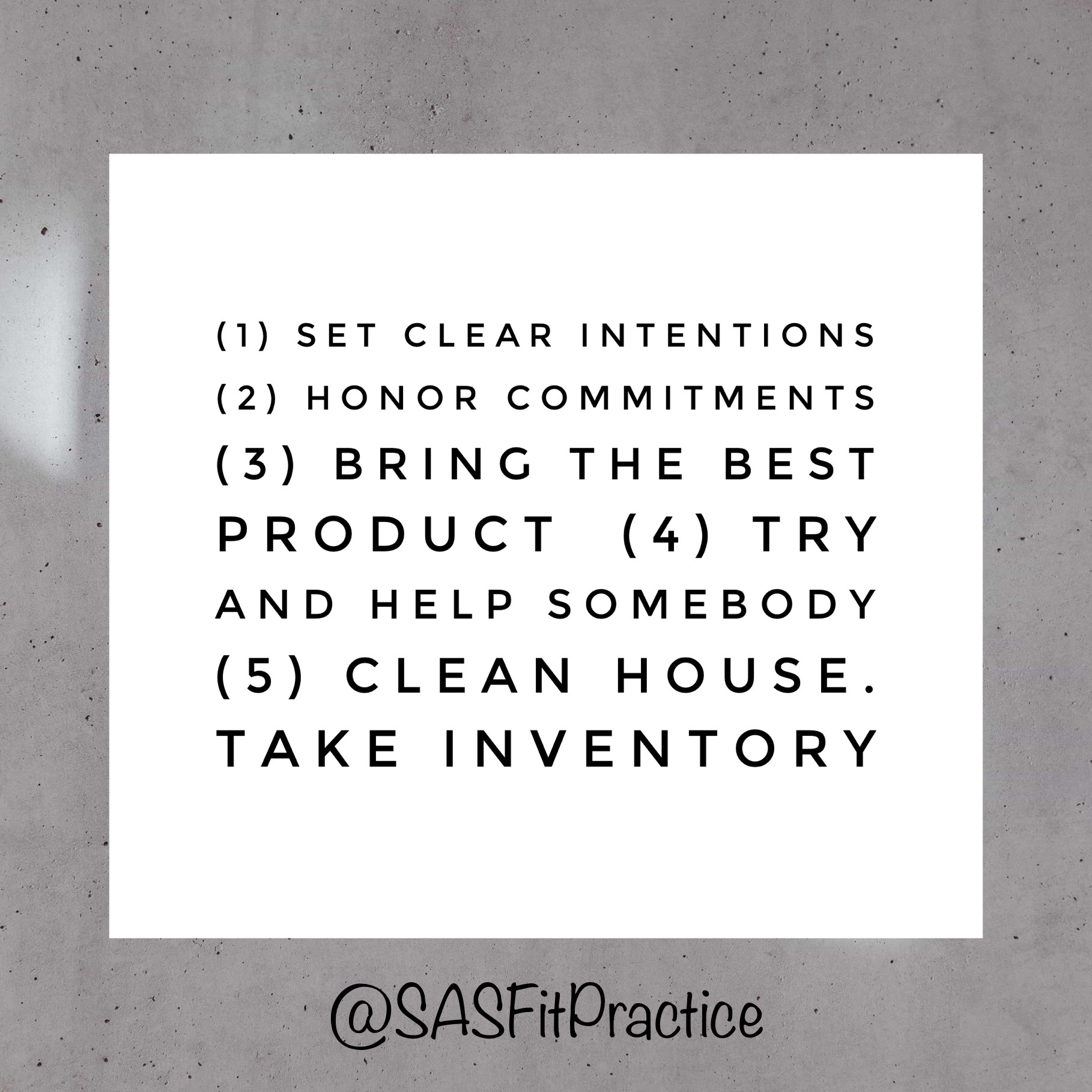
1. Set clear intentions for your day: First things first, did you take time to identify what needs to get done today and what things take priority or are you just jumping out of bed and into the chaos?

Ordered thinking requires more than good intentions or falling into distracted morning routines. Set time aside to quiet your mind before you do anything else. If you haven’t already, consider a mediation or yoga practice. WRITE IT OUT. On your phone, on a post-it, whatever keeps you organized just get it down. Journaling is a great morning exercise too and can accompany that.

2. Honor commitments. “Obligations squarely met” Make a decision to honor your commitments no matter what and stick to it!! That applies to both business and personal. Avoid cutting things out to catch-up on other things. You will be taken more seriously. You will get more done in the long run. You’ll enjoy greater balance. You’ll avoid negative self-talk.

3. Bring the best product: There’s nothing better than that good-good tired after a long day of bringing your all. Why shouldn’t that be the goal every day. You may not always have the same energy but you can make a consistent commitment to do the best you can with what you have.

4. Try and help someone every day. That’s it. You’ll will benefit and so will your work.

5. Clean house. Take inventory: a business that doesn’t take inventory will fail but this applies to you personally as well. How do you expect to succeed if you’re not making time to clean house mentally and emotionally? Talk. Journal. Pray. Whatever works for you but take time for personal reflection and development on a daily basis. It’s the only way to grow. #successmindset #wordgasm #personallegend #successquotes

#winningmentality #inspirationalquotes #successgoals #personaldevelopment #trusttheuniverse #5amclub #personalgrowthjourney #propertwelve #personalgrowth #couragequotes #businessadvice #powerfulwords #positivemindset #jayshetty #positivequotes #thinkandgrowrich #positivemomentum #entrepreneurminds #mindsetcoach #inspirationalbusiness #wisdomquotes

Stop Dieting/Eliminating/Restricting and start living…like really LIVING!

I spent two-thirds of my life “dieting” or otherwise trying to “fix” myself. I did the math and it’s true! I just turned 36 and I put myself on my first calorie counting diet when I was twelve. Twelve! I still remember telling my half-brother I would “pass on the pancakes” and picked-up an orange instead.

That was the beginning of my life long quest to “fix” anything I saw as being “wrong” with me. Self-help books up the wazoo…you name it I’ve got it. Haven’t necessarily read it but I guarantee you I sought it out lol.

I imagined if I studied my shortcomings, mastered an understanding of them, and really worked hard I could eliminate them with sheer will and determination.

That was until yesterday. Because yesterday I realized something. That for the PAST YEAR and some change somethings shifted in me. I’ve stopped focusing on “fixing” me and started really LIVING instead.

I started filling myself up with things like voice lessons that soothe my very insides, (as one of my exes used to say “vibrations are the most pure form of communication” -and I call singing communicating with my spirit) monthly travel, dance classes, cooking, fitness, and the list goes on. I’ve poured my time and attention into growing through those experiences. I’ve shown up for myself by being CONSISTENT with them, and gradually, very gradually, what I’ve been experiencing is the unhealthy behaviors in my life, like overeating and smoking (shocking I know) slipping away.

And then it occurred to me…when it comes to living HAPPIER, HEALTHIER lives, maybe the answer is less focus on dieting, restricting, and eliminating parts of ourselves and focusing more on filling ourselves up with the good shit! That “mmmm, yes” please give me some more, good soul pleasing stuff.

Fill our lives up SO much that there’s no room, no time, no energy to be drawn towards old behaviors that get us jammed up.

Wellness and happiness is a lifestyle choice. If your focus on dieting and restricting and fixing yourself is wearing on you then pause. Give yourself a break. PUT THE BOOKS DOWN. Try LIVING instead.

Become aware of and change your limiting beliefs

Beliefs are conditioned perceptions that are built upon old memories of pain and pleasure.

Beliefs form the foundation of our expectations. They form the core of who you are because they determine your expectations and perceptions of reality. The thoughts and self dialogue that follows from that influences your ability to achieve and be successful through the day. Every day.

Scary and completely empowering concept right?!

Essentially the beliefs you got going on in your head right now are influencing 95% of the decisions you make and the actions you take.

They form the foundations of your self concept which determines what? How you see yourself in relation to the world around you.

For example, when I was younger my default in high pressure social situations was to think that people were rejecting me. That was partly built on truth and experiences from being the only black kid in my hometown and actually being discriminated against but later in life it wasn’t reality. I had to shed that belief.

The labels you give yourself, the limitations you put on yourself, and the expectations you have of yourself are built upon your belief system.

If your belief systems are not aligned with the goals and objectives you would like to accomplish, then you will often feel stuck and unfulfilled.

I know I’m operating from limited beliefs in the wellness part of my life when I start pulling for short cuts in training or avoiding certain exercises/machines at the gym. So today I said “F a Jacob’s Ladder! I’m about to make this torture contraption my bitch!” There’s nothing telling me I can’t master it but me! I deserve to be in the best shape I can be. I 100% believe I’m capable of something great physically today! My steps (actions) need to follow in suit.

Which brings me to the empowering part of beliefs…the fact that YOU can change them. Change your dialogue and change your story.

What’s the fastest way to change limiting beliefs?

Visualize. Imagine the results mentally. Start producing them physically and that inspire and drive your beliefs in yourself.

Taking a step back let’s start slow.

Step 1 and my challenge to you today is to IDENTIFY YOUR LIMITING BELIEFS.

*Not all beliefs are limiting and all beliefs are neutral to start. A belief that works for you in your situation may not work for him and his situation.

If a belief helps you and is useful. Keep it! But if it hinders your progress than it’s an indication it’s a limiting belief.

Limiting beliefs manifest in the following ways:

• When you make excuses

• When you complain about things

• When you indulge in negative thoughts

• When you indulge in unhelpful habits

• When you talk to yourself in limiting and unhelpful ways

• When you jump to conclusions or make assumptions

• When you hesitate

• When you worry about failure or making mistakes

• When you think about procrastination or procrastinate for unreasonable amounts of time

• When you’re indulging in perfectionism

.

Follow me on Instagram @SASFitPractice or @OfficeWithoutWalls

Check out my YouTube channels at https://www.youtube.com/user/Sahmra1331

People Be Crazy: Guard Your Sanity With These Helpful Mobile Apps

I’m a business owner. I ain’t got time to lose my mind. If you can relate…here are some apps to help you guard your sanity no matter when or where you need them.

Insight Timer.

Rated as the top free meditation app on the Android and IOS stores, Insight Timer is home to some 7,697 free guided meditations, music tracks, talks and courses on a variety o topics. There are so many topics and practices to choose from; you can listen and find what works best for you.

Best part or lawyers – you get to decide how much time you want to devote to the practice. You can literally find tracks that last no more than a few minutes. Perfect for a quick mid-day stress relief session!

For more info visit insighttimer.com.

Headspace.

According to the folks at Headspace, “[i]t only takes a few minutes to change the rest of your day.”  Headspace teaches you to mediate and live mindfully with hundreds of themed sessions on everything from stress to sleep. BONUS! There are short session for busy schedules! -See, I told you I was gonna take care of you!

Meditation has been shown to promote subtle improvements in focus, attention and the ability to ignore distractions. Even if you don’t feel stressed, mediation can be useful for overall mental well-being in your practice.

For more visit headspace.com.

Worry Watch.

If you find yourself distracted by worries about cases, clients or personal events, Worry Watch may be an app for you. Worry Watch is a journaling app that allows you to track your worries in the moment and revisit them later.

The idea: You “reflect” on your anxiety patterns “realize” the outcome, and “reform” based on your own statistics. You might find that many of your fears are unfounded.

For more visit worrywatch.com.

Happify.

Our profession often creates and allows negative thinking patterns to take over and we don;t even realize it. Happify is a brain training app that helps you break negative patterns of thinking while forming new habits to help you take control of your thoughts.  The app consists of games and activities that can be used anytime and anywhere. YES!!!

As Happify says, “[s]mall slices of time can make big-time changes.”

For more visit happify.com.

Pacifica.

According to Pacifica, our reality is created through ongoing cycles of thoughts, feelings and behaviors. These can be positive or negative. Pacifica works to help you break negative cycles and learn to manage and change thinking and behavior patterns through cognitive behavioral therapy.

For more visit thinkpacifica.com.


For inspiration, motivation and outside-the-box ideas for living a healthy and happy work life Follow me on Instagram @SahmraStevensonEsq or @OfficeWithoutWalls

Or tune in for video content at….YouTube: https://www.youtube.com/channel/UC2XcEIoaCJ-3VoaXNnT0pwQ


Keeping Your Balance: The thinking about problem drinking and alcoholism has changed


Alcohol Use Disorder: Helpful Tools from the National Institutes of Health.    

The thinking about problem drinking and alcoholism has changed. It is no longer considered a black and white, you have it or you don’t, issue.

As the most commonly used addictive substance, it’s no surprise that alcohol addiction is prevalent in our society. In the US, more than 17 million adults have an alcohol use disorder (AUD). There are many factors that can contribute to developing an AUD, including your occupation.

According to a recent study by the Substance Abuse and Mental Health Services Administration (SAMHSA), an annual average of 8.7 percent of full-time workers aged 18 to 64 used alcohol heavily in the past month. Whether it’s on the job, during lunch break or before/after hours, alcohol abuse can cause major issues in the workplace, including:

As recently reported in NPR, the NIH describes that mild, moderate and severe problems exist and that there is not a one-size-fits-all approach to getting help. To help solve the problem, NIH has launched and online Alcohol Treatment Navigator website that is very informative and offers various assistance forms and guides.

www.alcoholtreatment.niaaa.nih.gov

Looking for the right questions to ask? How to help a friend? Advise a troubled client? The site is easy to navigate.

The tool-kits offered on the site include online evaluations and surveys to determine if you or another suffers from alcohol use disorder (*Note -honesty is required for best results), data on symptoms and severity, and guidance on questions you may want to ask a counselor or therapist.

In lawyer terms: It’s a website that helps people explore all the “evidence based” options, which may be more appealing to the legal and young professional crowd.

For ideas on how or what to move….Follow me on Instagram @SahmraStevensonEsq or @OfficeWithoutWalls

Or tune in for video content at….YouTube: https://www.youtube.com/channel/UC2XcEIoaCJ-3VoaXNnT0pwQ

FIVE rules for living your best life…. every day.

FIVE rules for living your best life…. every day.

  1. Insist on self-expression
  2. Get In Action. Stay In Action.
  3. Seek gratitude awareness
  4. Try and help someone everyday
  5. Move the Body

IMG_2674

I’ve been on this little journey exploring how to go about living my best life for a few years now.  It started out as an act of desperation. I was drowning in the world of working for others instead of building-up my own business and brand. Now that I’m out here I’m realizing living my best life is much more than that. Living a happy life is an intentional practice, and living your best life is the natural side effect that comes from pursuing and improving that practice every day.

Over the past year I’ve been playing around with different daily routines.  The 5 practices above have become my daily rules for happy living.

There are numerous ways to seek happiness in your day, but this is what has worked for me as a busy young professional. I encourage you to identify the things from this list that are helpful to you and try them, tweak them…make them your own.

  1. Insist On Self-Expression

This one is at the top of my list because it is absolutely essential to preserving some semblance of sanity, nurturing a sense of self, and feeding your vision and purpose for life as you continue to live it.  Let me clarify what I mean by “self-expression.”

We express ourselves generally as a part of our every day lives. In our professional lives to our colleagues, clients and counterparts. In our personal lives to our family and friends. Sometimes even to perfectly good strangers when they do things like cut us off on I-495. I’m not talking about how we express ourselves in these ways.  What I mean by “self-expression” is the expression of your feelings and thoughts through intentional activity.

The benefits of active self-expression are often times subtle and work “behind the scenes” in our lives.  When practiced regularly, intentional and active self-expression promotes self-awareness, self-knowledge and self-control.

What does active self-expression look like? Active self-expression is different for everybody at different times. That’s the beauty of it! There aren’t any rules to how you do it because it’s yours! Singing, dancing, drawing, writing a blog article, journaling, speaking to others, designing a new workout… these are just a few that I rely on, but the possibilities are endless.

  1. Get In Action & Stay In Action.

If you’ve ever gotten stuck, or just had trouble getting started during the day you’ll appreciate this one. Procrastination is frustrating, It can jack-up a whole day. Worse, it can kill enthusiasm and the drive necessary for knocking out your list of goals.

Procrastination is usually rooted in fear, but knowing that isn’t always helpful in the moment because, “hello” we have things to get done. Pausing to evaluate our hang-ups, anxieties and inner struggles when there is a deadline to meet is not going to work.

What IS helpful when you’re stuck, or can’t get started, is reminding yourself to “get in action, and stay in action.” Say it to yourself, BELIEVE IT, repeat it, and then get moving.

No overthinking or catastrophizing here! Just get yourself in motion and try not to resist the flow that follows.  The moment you jump in, complete even the smallest task, and GET IN ACTION, you’re going to feel better. Your brain is going to be reminded that “you got this!” Your self dialogue is going to improve. You’re going to have more hope. Your perspective will change and you will be in position to create momentum in your day.

  1. Seek Gratitude Awareness.

How many times have you ended your day thinking about all the things you DIDN’T get done? How about you stop doing that?! Instead make a mental note of what you DID accomplish for the day and what things you did well.  Appreciate yourself and your efforts, even where you’ve fallen short.  Identify and appreciate the things that did work out for the day, even if its just as simple as remembering to make it to the dry cleaners. Let them carry you into appreciating the ways you’ve fallen short as lessons that have the potential to carry further than you knew you could go.

This is a simple example of practicing gratitude awareness in your everyday but there are many more. Ideally getting in touch with some gratitude before the day is all the way over is going to benefit you more, but hey, sometimes the end of the day is all we got and that’s better than nothing.

I love this rule because gratitude is truly a game-changer. A beautiful way to incorporate it into your morning is with a gratitude list.  It doesn’t have to be complicated. Keeps some note cards in the car or make this a part of your journaling (Insist on self-expression) before jumping into your work for the day.

The point is that what we focus on throughout the day magnetizes in our minds. Choosing to focus on gratitude and positive takeaways keeps us MOVING FORWARD (Get in action & stay in action) and attracts more good things in our lives.

  1. Try To Help Someone Everyday

Helping others should be a natural extension of every business leader’s responsibilities. Unfortunately, it doesn’t come as easy as you would think. As leaders, we often get too caught up in operations or our own problems to give people the help they need. Working in a service profession I’ll admit this one did not become a regular daily practice for me for some time because, well, I thought what I was doing professionally was enough.

Helping others is more than just service work, its work on yourself. It forces you to get out of your own head and shift your focus from self and all the things you can’t control in life. It offers valuable perspective that can help you deal with your own struggles and worries. It cultivates gratitude and awareness of the blessings already present in our worlds. (Seek gratitude awareness) Those are all good thoughts and feelings we get to carry with us as a result of reaching out to others.

  1. Move The Body

Last, but not least, and by far my favorite rule for a happy and winning day is moving the body.

Most of us spend a considerable part of the day sitting or standing still. Its unavoidable, and we all know it’s unhealthy for the body, but it is also toxic to the mind. Depression, sadness and a host of other negative emotions like anxiety and fear are acutely allergic to things like sunlight, fresh air and movement.

Making room for physical activity in your day is making room to take care of yourself.  Moving the body can be a form of self-expression. It’s also a great way to get unstuck (Get in action & stay in action) and jump start your brain. It builds confidence and self-esteem over time which are essential to living your best life, happy joyful and free!

For ideas….Follow me on Instagram @SahmraStevensonEsq or @OfficeWithoutWalls


http://www.sasfitpractice.com


It’s not dieting, it’s changing your lifestyle that matters.

It’s not dieting, it’s changing your lifestyle that matters.

What I’m about to say is not brand-new information but I feel inclined to touch on it because around this time of year is when folks are most susceptible to fall for diet marketing gimmicks also known as “quick fixes” when it comes to pursuing personal weight loss and physical fitness goals.

You know the kind. They usually end with the word “diet” and begin with the name of a city or a fruit, or something designed to pull you in and convince you of some sort of magical ingredient or power sure to be the end to all your woes and nightmare battles with the scale. How many of these can you name? South Beach Diet, Grapefruit Diet, Cabbage Diet, Green Smoothie Diet, Cayenne Pepper & Lemon Cleanse, Atkins Diet, Keto Diet, Vegan Diet…. the list goes on. Am I saying these diets are bogus? No not at all. They have been celebrated because they produce quick short-term results when followed, but if they are all you are relying on you are setting yourself up for frustration and failure.

They can also lead to a sense of confusion and misdirection about what really works when it comes to successfully losing weight and understanding your body -it’s needs and science.

If you want to lose fat and keep it off, if you want to feel good year-round, you have to make a lifestyle change and that means looking at behaviors, patterns, mind sets, and even the emotions sometimes surrounding your fitness and/or nutrition practices.

What does a lifestyle change look or feel like? How do you know you’ve made a change? Do you get some sort of magical wisdom when you “make the change”? Does that mean you will start craving broccoli and not chocolate?

These are good questions. And here is the answer and the secret to succeeding with this at the same time: The difference between a diet mentality and a lifestyle mentality is a matter of perspective. Ta-da!!!! How about that for some reality.  It all starts in your head and with your attitudes.[1]

So how do you change your attitudes? Well you’ll be happy to know I can answer that with two simple words.  GET MOVING! Moving your body physically impacts your mood, your state-of-mind and most importantly your perspective. Over time getting moving ultimately makes you feel better. Going back to the broccoli, you won’t find that it tastes better because you are in the right frame of mind, but you might have a better attitude about eating it, and that can make a difference when it comes to keeping your goals in mind in the long term.

Indulge me while I take a slight detour here: You don’t have to make things overwhelming. If you have trouble motivating yourself for long workouts, chop it down into manageable size pieces to get started and let the momentum carry you as you build over time.

For example, walking for 15 minutes, four times a day burns as many calories as walking steadily for an hour. There may be benefits to combining them into one long walk, but you need to weigh that against what you enjoy doing and what fits into your schedule.[2] Perhaps you build up to something longer as you become more clear about what works for your body and your schedule. That will only happen if you KEEP SHOWING UP though -without applying the movement rule consistently, you cheat yourself of the opportunity to learn and adjust for long term sustainability. [3]

Okay, now back to the subject at hand: If you want to make the change from a diet mentality to a lifestyle mentality you have to believe that you can do it.  As you are making your resolutions this year and deciding where to make changes and how, here are two central themes to keep in mind that might make the difference between success and failure for you this year:

Diets are all about numbers while lifestyle changes are about #YOU
Diets are all about numbers -the numbers on the scale, the number of calories you eat, the number of calories you burn. These numbers, and how well you STICK to these numbers define your success on a diet.  Lifestyle changes are about YOU -its about making your eating and physical activity on a daily basis, match up to your overall goals and desires. Your success is defined by how you learn to make these changes consistently and how those changes make you feel internally as well as externally.  Your success with applying these changes will come sometimes quickly, and other times more slowly, but the changes and improvements will be apparent to you so long as you put in the work and keep showing up for yourself.

Diets are temporary. Lifestyle changes are FOR LIFE (with room for growth and change)

Diets can only change your appearance, they can’t change what is inside of you. If your mindset and emotions, your old ideas, remain the same, you will eventually return to old behaviors. The more you repeat this short-term pattern, the worse it gets.

Lifestyle changes involve both an internal and an external change. It involves changing your relationship with food, nutrition and exercise. The problem isn’t just what you eat or how much of it you eat, but HOW and WHY you eat the foods you do. What really needs to change is the pattern of eating mindlessly and impulsively and in some cases using food to manage stress, emotions or to distract yourself from your own thoughts.

That doesn’t mean you don’t need to think about eating sensible options and portions, that is very important. But it is not as important as your ability to get to a happy and satisfied place inside yourself. Learning to be happy with and accept the body you have is how you get yourself closer to the body you are ultimately working for and how you keep it. Diets don’t teach you that.

Moving the body matters.

Time to bring things full circle: The easiest adaptation to your daily schedule that you can make is to not find, but MAKE the time to do yourself a favor and get your body moving. Negative emotions like depression and anxiety are allergic to things like sunlight, fresh air and most importantly physical activity and movement. Don’t psych yourself out. Take on little bits at a time.

For ideas on how or what to move….Follow me on Instagram @SahmraStevensonEsq or @OfficeWithoutWalls

Or tune in for video content at….YouTube: https://www.youtube.com/channel/UC2XcEIoaCJ-3VoaXNnT0pwQ


[1] That’s another reason why fad diets can be so damaging in the long run, because their results don’t last, and the message that sends to the average consumer is that long term weight loss success is not an option. Not to mention these quick fixes are designed to be extreme, the purpose being to shock your body and get results in a matter of days or weeks. But most times they shock your mind too because the focus is on deprivation or nutrient avoidance. Message sent? To eat healthy I have to get and remain miserable. Wrong.


[2] The American Heart Association and the U.S. Centers for Disease Control say in their exercise guideline for healthy adults that you should get 30 minutes of moderately intense exercise, such as brisk walking, five days a week, or a total of 150 minutes spread out over the week.


[3] The short-term discomfort is worth it stick with it!